-
Home
-
China Data
- China Import and Export Data
- China Statistics Import and Export Data(CSD) China Trade Flow Import and Export Data(CTF) China Total Import and Export Data(CTD)
- China Trade Research Monthly Report(CTRMR) China Trade Research Custom-made Report(CTRCR) China Trade Research Yearly Report(CTRYR) China HS Code
-
USA & Canada Data
- USA & Canada Import and Export Data
- US Bills Export Data(USBED) US Statistics Export Data(USSED) US Trade Flow Import and Export Data(USTF) US Total Import and Export Data(USTD) Canada Importers and Exporters(CAIE)
- US Bills Import Data(USBID) US Statistics Import Data(USSID) US Importers and Exporters(USIE) Canada Trade Flow Data (CATF) Canada Total Import and Export Data(CATD)
-
Asia Data
- Asia Import and Export Data
- Indonesia Kazakhstan Sri Lanka Malaysia Philippines Afghanistan
- India South Korea Japan Thailand Jordan Taiwan & Hongkong & Macao
-
Vietnam
Pakistan
Singapore
Turkey
 Uzbekistan
Other Asia Countries
Uzbekistan
Other Asia Countries
-
Latin America Data
-
Europe & Africa & Oceania Data
- Europe & Africa & Oceania Import and Export Data
- Russia UK Georgia Norway Egypt Australia Samoa
- EU 28 Countries Moldova Azerbaijan Switzerland Botswana New zealand French Polynesia
- Ukraine Spain Belarus South Africa Morocco Fiji Other Countries
-
Market Research
-
Products
 China Data
- USA & Canada Data
- Asia Import and Export Data
- Latin America Data
- Europe & Africa & Oceania Data
- Company & Market Research
-
China Statistics Data(CSD)
China Trade Flow (CTF)
China Total Data(CTD)
China Trade Monthly Report
China Trade Yearly Report
China Trade Custom Report
China HS Code
-
US Bills Export Data(USBED)
US Bills Import Data(USBID)
US Statistics Export Data(USSED)
US Statistics Import Data(USSID)
US Trade Flow (USTF)
US Importers and Exporters(USIE)
US Total Data(USTD)
Canada Trade Flow (CATF)
Canada Importers and Exporters
Canada Total Data(CATD)
-
Indonesia
India
Vietnam
Kazakhstan
South Korea
Pakistan
Sri Lanka
Japan
Singapore
Malaysia
Thailand
Turkey
Philippines
Jordan
Uzbekistan
Afghanistan
Taiwan & Hongkong & Macao
Other Asia Countries
-
Mexico
Brazil
Venezuela
Costa Rica
Bolivia
Honduras
Argentina
Chile
Peru
Colombia
Uruguay
Paraguay
Panama
Ecuador
Nicaragua
EL Salvador
Guatemala
Other Latin America Countries
-
Russia
EU 28 Countries
Ukraine
UK
Moldova
Spain
Georgia
Azerbaijan
Belarus
Norway
Switzerland
South Africa
Egypt
Botswana
Morocco
Australia
New zealand
Fiji
Samoa
French Polynesia
Other Countries
-
Trade Tools
-
About US
-
Contact US

News
Germany Plastic Products Export Analysis Report
04:08 29 / 09 / 2026
Germany Plastic Products Export Analysis Report Global Trade Performance & Market Dynamics under HS Code 392690 (Calendar Year 2025)
Germany has long maintained a premier position as a global leader in the manufacturing of high-quality industrial, medical, and consumer plastic products. In 2025, products categorized under HS Code 392690 (covering other articles of plastics not elsewhere specified, including precision industrial components, laboratory ware, protective gear, and custom molded structures) demonstrated exceptionally robust global export momentum.
According to the latest customs data, Germany’s total annual export value for this specific product classification reached USD 10.46 billion in 2025, underscoring its foundational role across global automotive, healthcare, electronics, and advanced engineering supply chains.
Macro Overview
·High Concentration in Core Premium Markets: The United States, France, and Poland stood firm as Germany's top three global export destinations, collectively accounting for 22.5% of the total export value, with the United States leading as the primary non-European trade corridor.
·Deep-Rooted Pan-European Supply Network: Beyond the top three markets, highly industrialized European nations such as Austria, Czechia, the Netherlands, Switzerland, Italy, and Spain recorded substantial import volumes, demonstrating that German precision plastics remain an irreplaceable benchmark for regional manufacturing hubs.
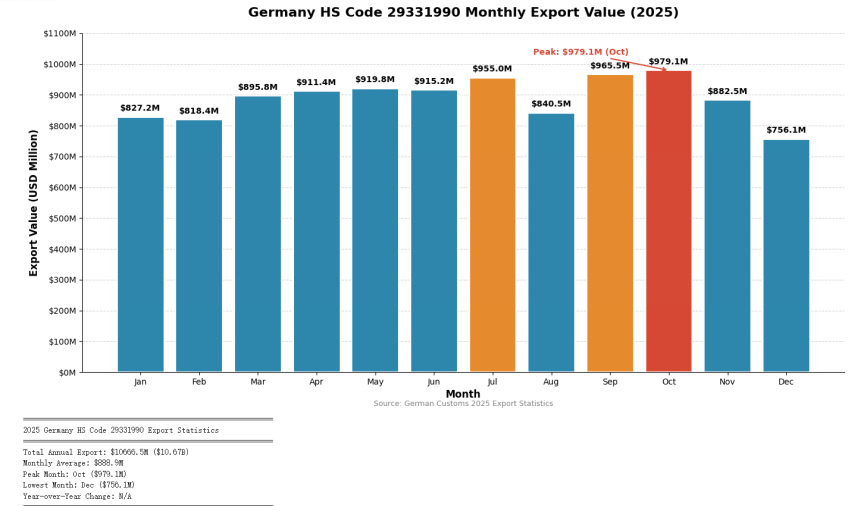
·Stable Manufacturing & Despatch Rhythm: Unlike seasonal commodities, industrial plastic products exhibited a highly resilient and distributed monthly export flow. Monthly values consistently remained above USD 750 million, peaking in October at USD 979.11 million, which reflects steady corporate procurement and global industrial inventory replenishment cycles.
💡Customs Data Value Point: Unit Price & Category Baseline Analysis
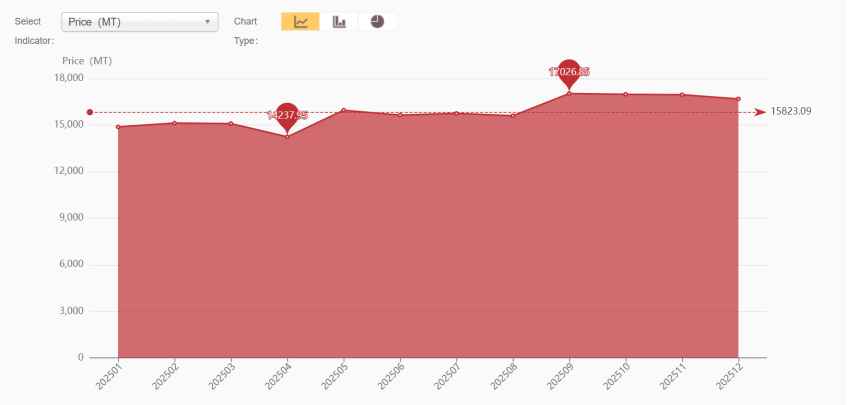
Because HS Code 392690 encompasses a massive variety of goods—ranging from standard injection-molded parts to aerospace-grade or ultra-pure medical polymers—the product category is highly heterogeneous. Stakeholders should cross-reference their specific procurement unit costs against historical corridor averages to assess technical premiums. Offers significantly above baseline pricing typically signify highly complex, patented formulations or custom toolings, whereas numbers drastically below should prompt immediate audit for regulatory compliance and quality risks.
Top 10 Global Import Destinations (2025)
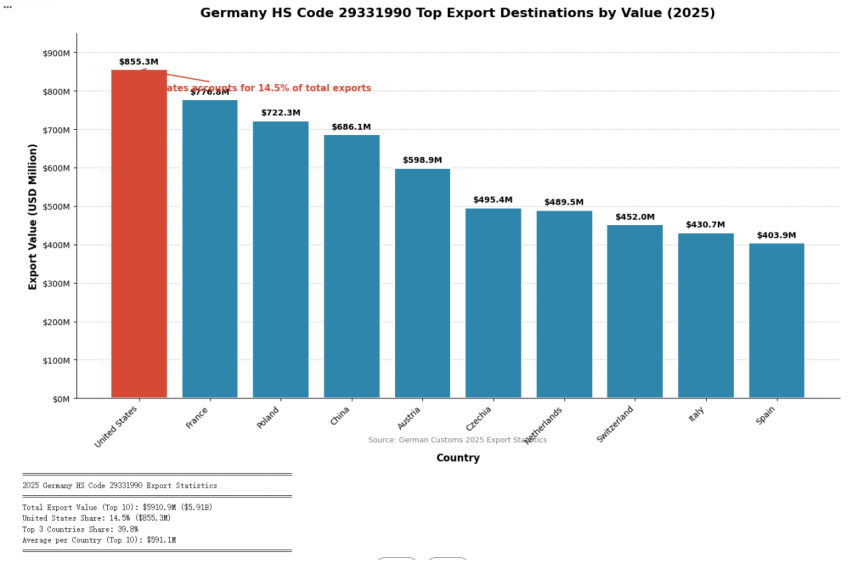
Based on aggregated customs data for the full calendar year of 2025, the top 10 global trading partners for Germany’s 392690 plastic products are detailed below:
Destination Insights
·United States (14.2%): Retains its position as Germany’s absolute largest intercontinental destination. Consistent demand is driven by the American medical devices sector, automotive assembly, and advanced electronic packaging seeking high-tolerance components.
·Central & Eastern European Integration (Poland & Czechia): Together holding over 20% of the top 10 market share, Poland (12.0%) and Czechia (8.2%) highlight the seamless cross-border supply chain of European OEMs. German factories supply critical engineering sub-components to these regions for integration into major automotive and machinery frameworks.
·China (11.4%): Representing an import size close to USD 686 million, China's volume underscores its ongoing reliance on specialized, high-purity laboratory plastics, semiconductor handling components, and premium automotive parts.
💡Customs Data Value Point: Horizontal Price Leveraging in Negotiations
For procurement executives, mapping your own direct contract unit prices against macro trade levels across different corridors creates immense commercial leverage. If historical costs in your region reflect unjustified premiums compared to high-volume standard corridors (e.g., France or Germany-US channels), the data can serve as an objective anchor during annual pricing reviews to negotiate structured discounts or push for supply chain optimization.
Monthly Export Trends (2025)
The monthly distribution of German exports reveals distinct structural adjustments that closely correlate with international manufacturing calendars, factory maintenance seasons, and fiscal year-end balancing.
Monthly Export Performance Metrics
Trend Insights
·Q3-Q4 Autumn Procurement Surge: Export activity accelerated intensely through September and peaked in October at USD 979.11 million. This surge aligns perfectly with global industrial preparation for Q4 production targets and holiday inventory buffering by overseas distributors before winter closures.
·Summer Holiday Contraction: August volumes saw a temporary drop to USD 840.48 million. This contraction is a classic structural signature of the European summer factory shutdowns and reduced logistical capacity during peak vacation periods.
·Year-End Inventory Tapering: December output registered the absolute lowest performance of the year at USD 756.15 million. This sharp drop reflects Western Christmas factory breaks, customs slowdowns, and deliberate corporate balancing to maintain low stock numbers for annual tax audits.
💡Customs Data Value Point: Churn Risk Mitigation & Supply Optimization
Industrial plastic shipments typically run on continuous contract loops. By monitoring country-level procurement frequencies against macro baselines, enterprises can execute: 1. Strategic Sourcing Windows: Mitigate logistics bottlenecks by routing orders out of Germany during quieter windows (Dec, Jan-Feb) rather than competing for freight capacity during the intense Sep-Oct peak. 2. Early Churn Diagnostics: If a specific key customer's buying volumes contract consecutively over three months while the general national import indices remain stable, it serves as an early trigger that the client might be shifting toolings or sourcing from lower-cost manufacturing hubs like China or India.
Key Strategic Takeaways
1.Consolidate Footprints in Core Industrial Corridors: Since Western Europe, Poland, and the US absorb over half of all German plastic exports, manufacturers must prioritize multi-year Master Supply Agreements with regional Tier-1 automotive and medical distributors to protect baseline volumes.
2.Double Down on High-Value Specialty Materials: To avoid margin erosion from generic injection molded parts, German firms should accelerate investment in advanced biocompatible plastics, eco-conscious recycled resins, and lightweight structural components. The peak numbers in autumn prove that international markets remain willing to pay a heavy premium for high-spec technical execution.
3.Align Freight & Resource Logistics Ahead of Peaks: Given the recurring industrial pattern of an August lull followed by a massive September-October spike, procurement offices should arrange block-space cargo agreements with shipping lines by mid-summer to avoid severe peak-season delays.
4.Deploy Advanced Value-Added Technical Portfolios: Exporters can maximize client stickiness by providing engineering support, localized tooling adjustments, and complete regulatory dossiers (such as RoHS, REACH, and FDA medical certifications) to expedite compliance processing for their international buyers.
💡 Customs Data Value Point: Vetting Premium Suppliers Using Customs Intelligence
Global buyers can perform objective 4-step health screening on prospective German plastic vendors: ? Export Scale: Prioritize suppliers maintaining stable, large-scale annual export performance, which confirms operational reliability. ? Global Compliance Footprint: Select partners who actively export to heavily regulated territories like the US (FDA standards) and France/EU (REACH requirements). ? Price Alignment: Ensure vendor quotes stay within an acceptable range (±10-15%) of macro monthly averages. Extremely cheap quotes represent an immediate warning sign for lower-grade regrinds or non-compliant stabilizers. ? Operational Continuity: Favor vendors with a continuous, 12-month active shipping history, indicating healthy cash flow and a stable workforce.
Conclusion
In 2025, Germany’s export trade for HS Code 392690 remained exceptionally resilient, with its total annual trade successfully crossing the USD 10.4 billion milestone. The United States continues to serve as an indispensable trans-atlantic market, while the interconnected industrial clusters of Europe form a strong, defensive manufacturing ecosystem.
Moving forward, as international manufacturing shifts toward carbon-neutral processes, automated lightweight components, and stricter circular economy laws, German plastic exporters are beautifully aligned to deliver sustainable value. Through superior technical engineering, strict quality control, and unparalleled compliance networks, Germany is poised to secure its vital position at the heart of advanced global manufacturing for years to come.